
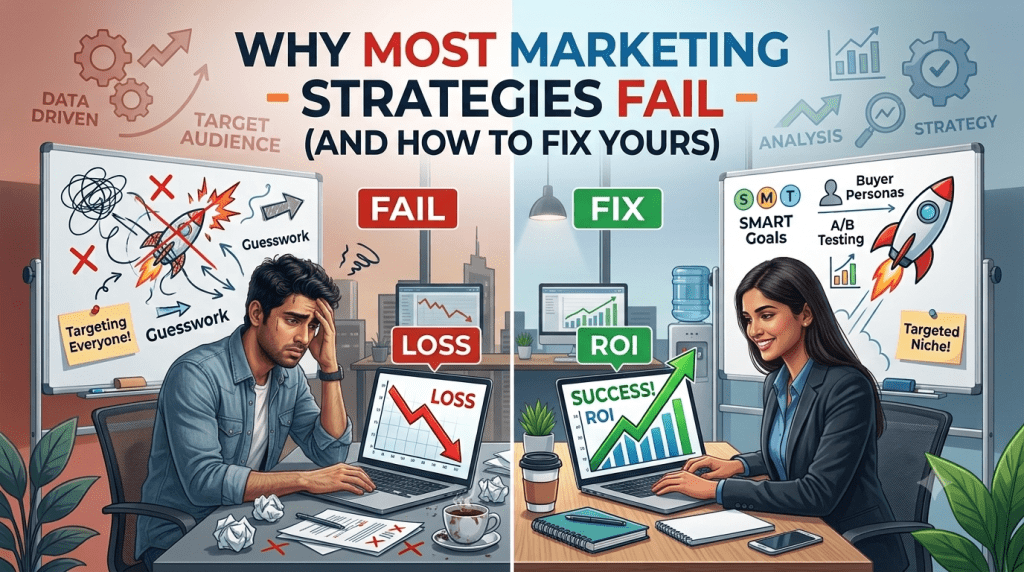
We’ve all been there. You spend weeks—maybe months—crafting the “perfect” campaign. You have the slickest graphics, the trendiest hashtags, and a budget that feels substantial. You hit the “publish” or “launch” button with high hopes, waiting for the leads to pour in and the sales to skyrocket.
Then, silence.
Or worse, you get a handful of clicks that go nowhere. It’s frustrating, expensive, and frankly, a bit demoralizing. But here is the secret that most agencies won’t tell you: you aren’t alone. In fact, studies suggest a massive percentage of marketing campaigns fail to meet their objectives. The good news? Most of these failures stem from the same predictable traps.
In this guide, we’re going to pull back the curtain on why marketing strategies fail and, more importantly, how you can fix yours to start seeing actual results.
1. The “Catch-All” Trap: Targeting Everyone
The biggest mistake businesses make is trying to talk to everyone. If you’re selling to “everyone,” you’re essentially selling to no one. When your message is designed to appeal to the masses, it becomes generic, bland, and easily ignored. Because everyone have their own need and taste. If we are targeting for all then may be we are not reaching the people who in real need for the same
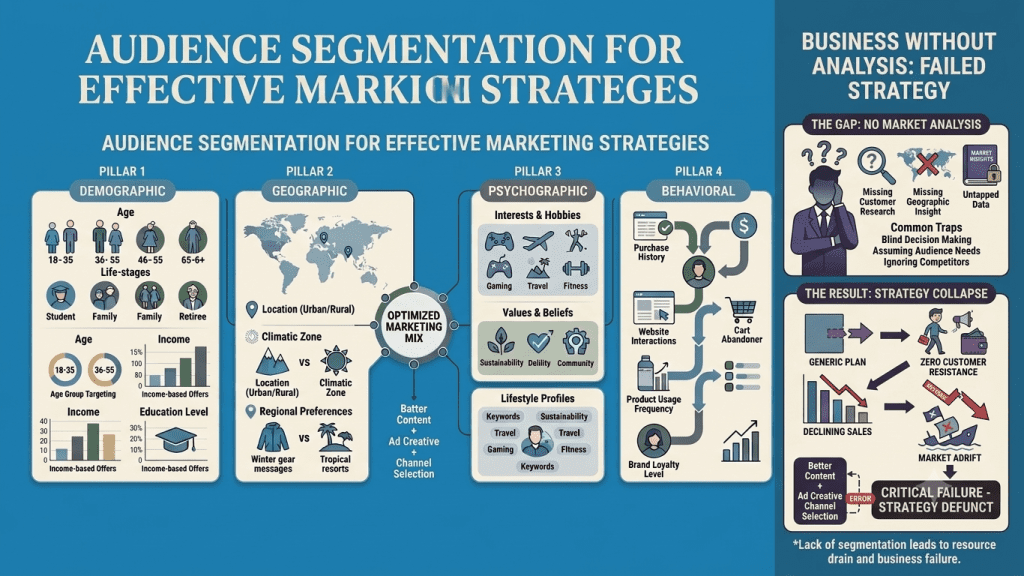
The Fix: Go niche. You need to build a detailed buyer persona. Don’t just guess that your customer is a “30-year-old professional.” Dig deeper. What are their specific pain points? Where do they hang out online? What keeps them awake at night? When you speak directly to one person’s specific problem, you become impossible to ignore.
2. Setting Vague Goals
“We want more brand awareness” or “we want more sales” are not goals; they are wishes. Without clear, measurable benchmarks, you’ll never know if you’re actually succeeding or just burning through cash.
The Fix: Use the SMART goal framework. Ensure your objectives are:
- Specific: Instead of “more traffic,” aim for “a 20% increase in organic website traffic.”
- Measurable: Use tools like Google Analytics to track your progress in actual manner.
- Achievable: Be realistic about your current resources.
- Relevant: Does this goal actually move the needle for your business?
- Time-bound: Give yourself a deadline to hit these numbers.
3. Ignoring the Data (or Looking at the Wrong Data)
Some marketers treat their strategy like a “set it and forget it” project. They launch and then check the results a month later. In the digital age, that’s a recipe for disaster. If you aren’t tracking your performance, you are flying blind. Means to tracking is that you are looking for the upcoming results from the very first day after set up an add on any platform.
The Fix: Embrace A/B testing. Don’t just guess which headline or image will work best—test two variations and let the data decide. If a campaign isn’t performing well after a few days, analyze the metrics, tweak your variables, and try again. Marketing is an iterative process, not a one-time event. By which we can get the clear guidance that in a/b which add is responsing good than the other and you can diversify your budget accordingly
4. The Content Disconnect
Is your content actually helpful, or is it just “filler”? Many brands post generic updates just to stay active on social media. If your content doesn’t provide value—whether through education, entertainment, or solving a problem—it won’t build trust. So, just elaborate as much as you can about your content by which people will get the logic and use of the same you are offering to the people.
The Fix: Focus on your Unique Selling Proposition (USP). Why should someone choose you over a competitor? Your content should answer this question repeatedly. If you’re a software company, write blog posts that solve common user headaches. If you’re a retail brand, show the human side of your product through storytelling.
5. Poor User Experience (UX)
You could have the best ad in the world, but if it leads to a slow-loading, confusing, or “broken” website, you’ve wasted your money. High bounce rate are often a sign that your landing page isn’t delivering on the promise of your ad. If it is taking too long to load your landing page the visitor will get frustrated and their will be high chances to leave your website even he is looking and liking your ad.
The Fix: Audit your landing pages. Ensure they are mobile-friendly, load in under three seconds, and have a single, clear Call to Action (CTA). Don’t make the user guess what to do next. Tell them exactly what to do, like “Sign up for a free trial” or “Get your discount now.”
The Path to Improvement: A Roadmap
Fixing a failing strategy doesn’t require a complete overhaul; it often just requires a change in perspective. Follow these three steps to recalibrate your efforts:
Step 1: Conduct a Post-Mortem
Don’t be afraid to look at your failures. Gather your team and ask the hard questions:
- Did we actually understand our audience?
- Was our message clear and compelling?
- Did we spend our budget on the right channels?
- Where did the drop-off happen in our funnel?
Step 2: Streamline Your Channels
Don’t try to be everywhere at once. If your audience is on LinkedIn, don’t waste 80% of your energy trying to make Tik Tok videos. Master one or two channels first before expanding. It’s better to have one high-performing channel than five mediocre ones. The benefit will display at very ease when you follow the same because you are not experimenting in that manner you are just investing on the platform where you are in real getting the results.
Step 3: Prioritize Consistency
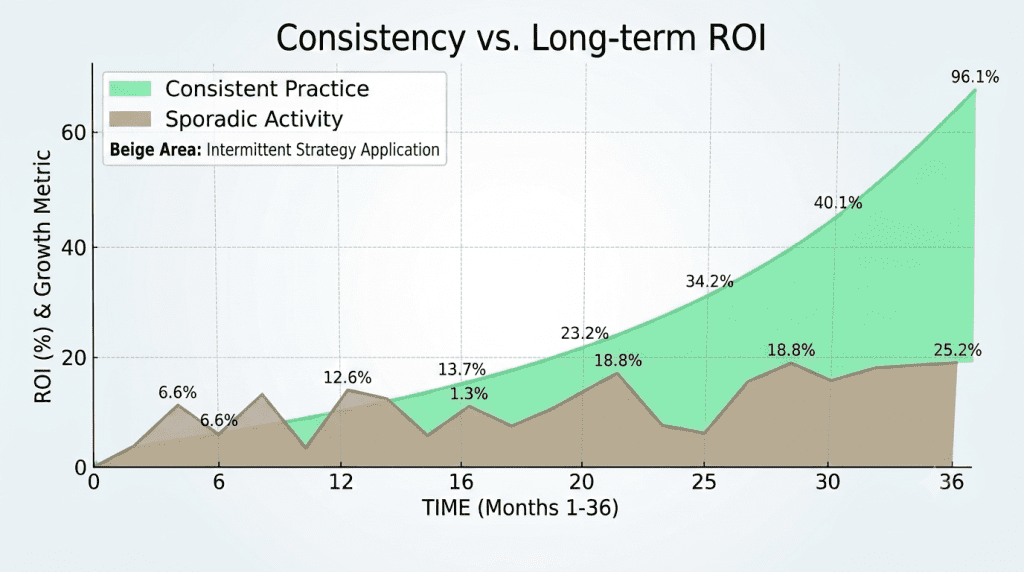
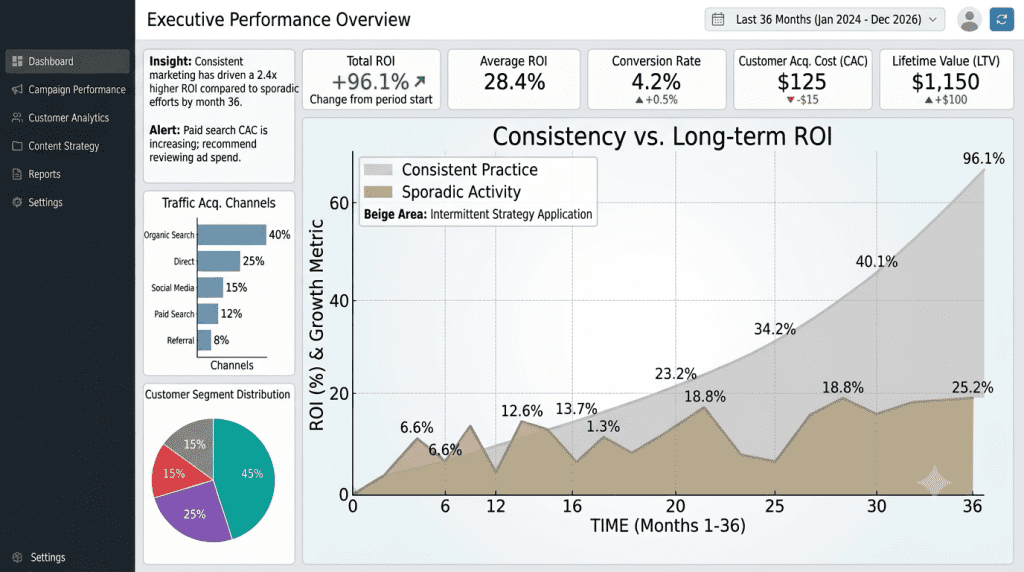
Marketing isn’t a sprint; it’s a marathon. You might not see massive growth in the first two weeks. The key is to refine your approach, test new ideas, and remain consistent with your brand voice and messaging. If you did not get the result in very first attempt it is required to analyze the report and come with a different strategy to grab the market.
Key Takeaways
Marketing is part science and part art. It’s about understanding human behavior and meeting people where they are with something that actually makes their lives easier. If your current strategy feels like it’s failing, take a breath. It’s not a failure; it’s just a data point. Use that information to pivot, refine, and try again.
The businesses that succeed aren’t the ones that never fail; they’re the ones that learn the fastest. So, stop guessing, start testing, and keep your focus on the person on the other side of the screen—your customer.